


A few of our stories and columns are now in front of the paywall. We at The Chief remain committed to independent reporting on labor and civil service. It's been our mission since 1897. You can have a hand in ensuring that our reporting remains relevant in the decades to come. Consider supporting The Chief, which you can do for as little as $3.20 a month.

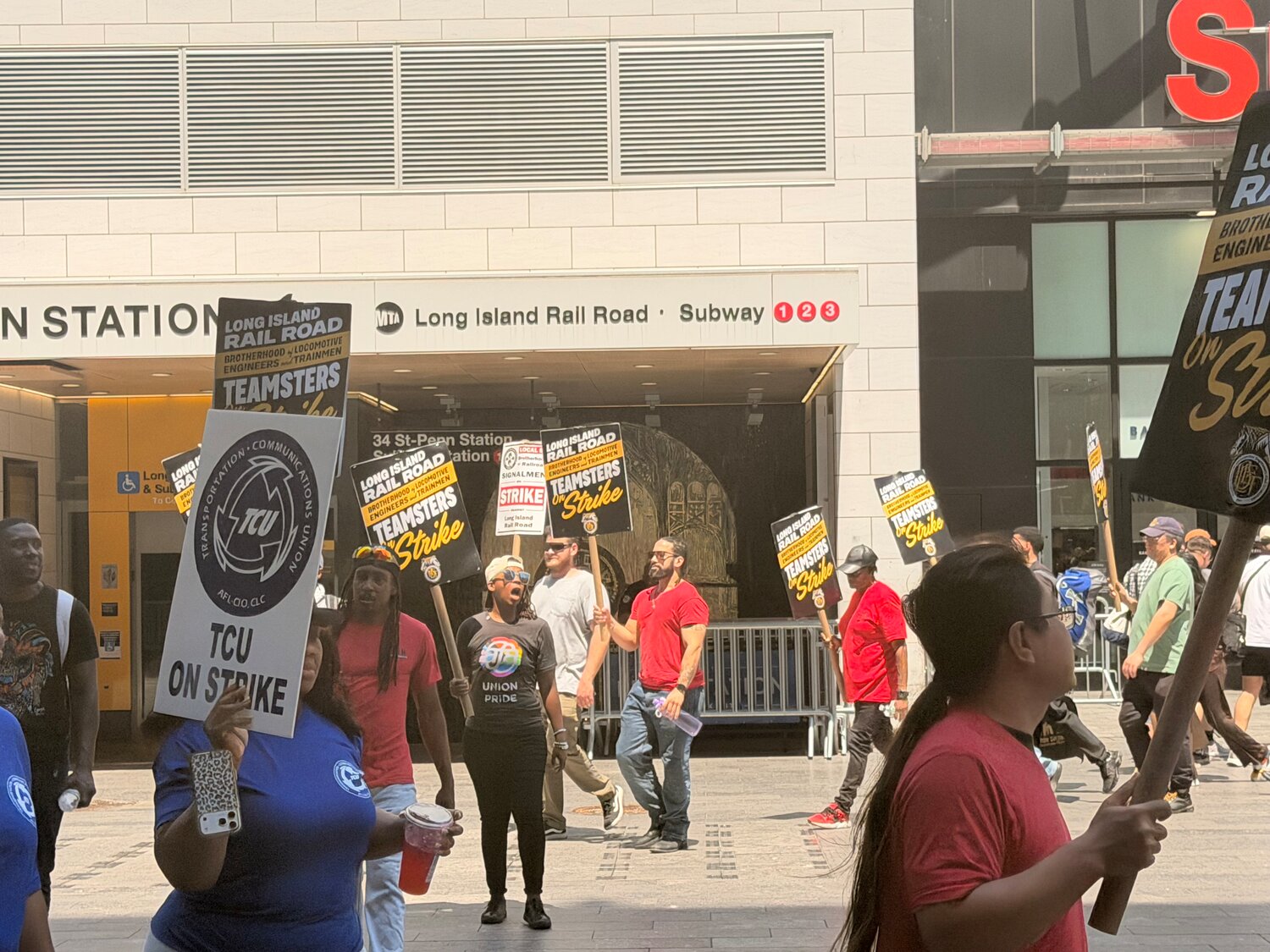


A strike of more than 3,500 Long Island Rail Road workers concluded on Monday after three days of pickets and shutdowns left roughly 250,000 commuters scrambling for alternate routes as negotiations between the Metropolitan Transportation Authority and multiple rail unions remained deadlocked.
Details on the agreement between the MTA and the unions were not immediately available.
"Tonight, the MTA reached a fair deal with the five LIRR unions that delivers raises for workers while protecting riders and taxpayers," Governor Kathy Hochul said in a social media post announcing the agreement just before around 9 p.m. Monday evening. "I'm pleased to announce that phased LIRR service will resume beginning tomorrow at noon."
The walkout, the first shutdown of the nation’s busiest commuter railroad since 1994, came after workers said they have gone without a raise since 2022 and accused management of derailing a compromise agreement reached through federal mediation.
Monday was the first full workday affected by the strike, with commuters crowding shuttle buses, subways and highways as transit officials warned the region’s transportation system would struggle to absorb the loss of LIRR service.
At picket lines throughout the metro area, workers described growing frustration with management and defended the strike as the product of years of stalled negotiations.
“It was management,” a strike captain with the Brotherhood of Railroad Signalmen Local 56 said Monday at Penn Station, arguing the MTA had not been “compliant at all in terms of negotiating.”
Last year, under the 1926 Railway Labor Act, both sides had agreed to submit a crucial wage dispute to two separate Presidential Emergency Boards, a neutral third-party mediation panel after failing to reach a settlement on their own. Workers had initially sought a 6.5 percent raise in the final year of a proposed contract, while the MTA proposed a lower figure.
The board, in its second iteration ultimately recommended a 5 percent increase — a number closer to what the unions wanted that labor leaders said they were prepared to accept.
“At that point, we kind of accepted it,” said the strike captain, who declined to provide The Chief with his name. “The third party said this is a fair number. We were like, okay.”
But contentious negotiations continued after those recommendations as the MTA feared setting what it saw as too-high wage standards for transit workers. Union officials said tensions escalated the night of May 15 when management returned with a revised proposal shortly before the strike deadline, including additional healthcare costs for workers.
“Not only did they come back with a different number, they also added stipulations,” the strike captain said, referring to increased medical contributions that workers estimated would amount to roughly 6 percent over the course of a year.
In a statement, MTA Chairman Janno Lieber accused the unions of rejecting a final proposal that “literally gave them everything they said they wanted in terms of pay.”
Lieber defended the agency’s push for newly hired workers to contribute a “reasonable portion” toward healthcare costs and argued the MTA could not agree to wage increases that would jeopardize the agency’s budget.
Union leaders rejected that characterization, arguing that management had undermined the compromise process by attempting to reopen settled terms at the last minute.
“This strike would not have happened if the MTA and LIRR offered our members the reasonable terms the government recommended multiple times,” Mark Wallace, president of the Teamsters Rail Conference and the Brotherhood of Locomotive Engineers and Trainmen, said in a statement over the weekend.
Transit officials acknowledged the scale of the disruption. LIRR President Rob Free previously warned the railroad could not fully replace commuter rail capacity with hired buses alone, which the unions described as “scabs”
Despite the growing disruption for commuters, picketers described strong support from organized labor and community members throughout the weekend. Workers said nurses, flight attendants, transit workers and other union members had visited the picket lines in solidarity.
The strike captain said negotiations supervised by the National Mediation Board resumed after Hochul intervened and called both sides back to the bargaining table on May 17, and negotiations continued throughout Monday.
Workers on the picket line also described broader frustrations that predated the current contract fight, particularly surrounding working conditions during the COVID-19 pandemic and what they viewed as years of stalled bargaining.
One engineer with more than three decades at the railroad picketing outside of Penn Station on Monday said workers felt they had repeatedly been “put to the side” despite being classified as essential workers during the pandemic. The veteran employee, who declined to provide The Chief with his name, said he spent six weeks sleeping in his car during COVID out of fear of bringing the virus home to his family.
“At some point, we’d like to be acknowledged,” the engineer said. “We’re asking for a reasonable cost-of-living increase.”
Workers also pushed back against criticism surrounding overtime costs and compensation, arguing that employees routinely sacrificed time with their families to keep trains operating during staffing shortages and emergencies.
The engineer, who said he has worked for the railroad for 32 years and also experienced the 1994 strike, argued that management had allowed negotiations to deteriorate unnecessarily.
“This is all preventable,” he said. “They’ve had three and a half years to get their act together, and they couldn’t come to a deal.”


Comments
No comments on this item Please log in to comment by clicking here